 FR
FR IT
IT DE
DE
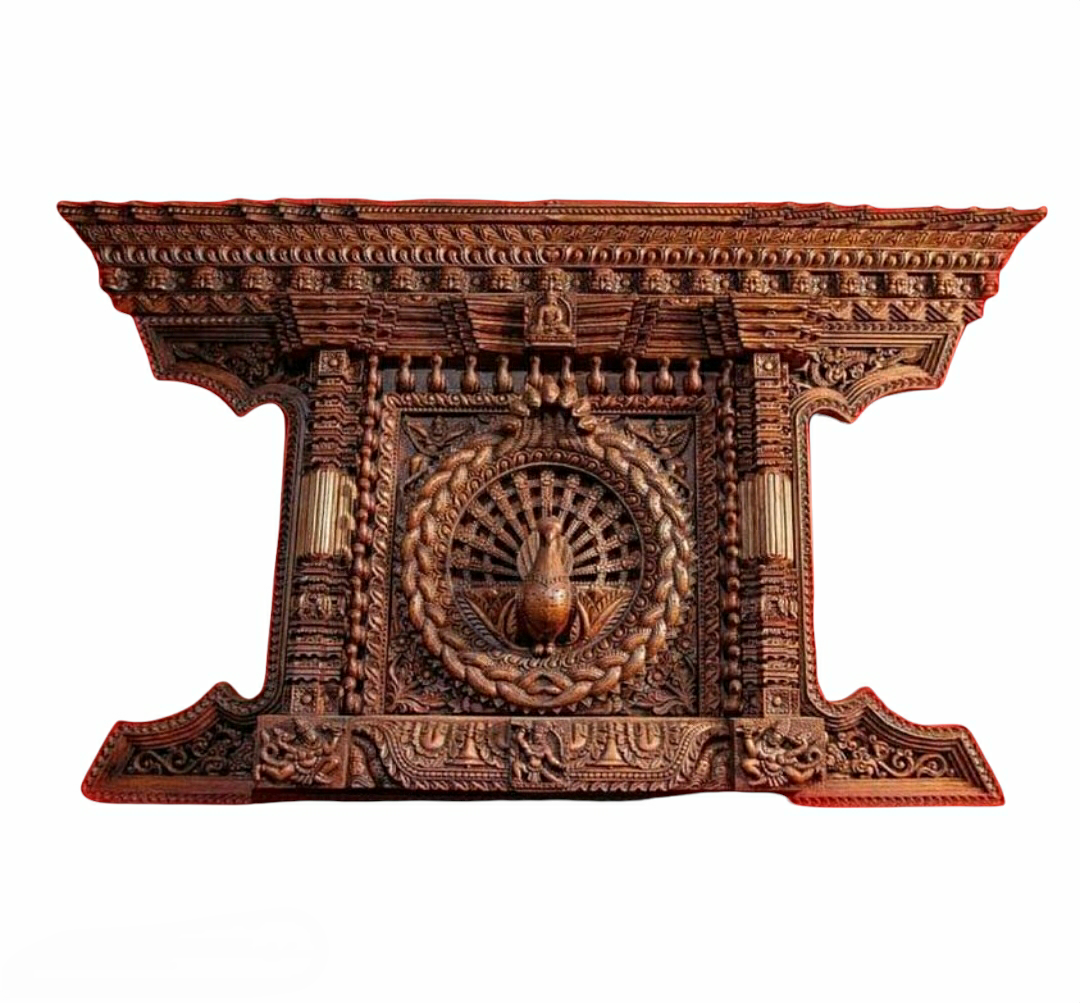
The Peacock Window, Bhaktapur
A Royal Legacy: Born in the 15th Century
The story of the Peacock Window begins during the Malla era, a golden age of art and architecture in the Kathmandu Valley. Carved in the early 1400s under the reign of King Yaksha Malla, the window was originally constructed as part of a Hindu monastery (Math – pronounced matha, मठ).
For over 600 years, this window has survived massive earthquakes, political shifts, and the relentless elements. It stands as a testament to the incredible longevity of native Nepali timber and preservation techniques.
The Masterful Craftsmanship: Geometry Meets Nature
To modern viewers, the window looks like a single, seamless piece of art. In reality, it is a complex jigsaw puzzle of interlocking wooden parts, held together entirely without a single metal nail or drop of glue.
The centerpiece is a magnificent, three-dimensional peacock standing proudly in the center. Its tail feathers are meticulously fanned out in a perfect circle, woven together so intricately that they form the functional lattice (jali) of the window itself. Look closely at the borders, and you will find dozens of tiny, detailed figures—including miniature birds, deities, and geometric patterns—carved into the frame.
The Secret of the Wood: This Newari window is made from sal tree (Shorea robusta), known locally in Nepal as Agrakh, is widely considered the “King of Timber” due to its unmatched strength, durability, and resistance to pests. It lasts for thousands of years.
On: The Cultural Meaning: In Newari culture, a window is never just a hole in the wall to let in light. It is a spiritual boundary and a statement of devotion.
The peacock itself holds a sacred place in both Hinduism and Buddhism. It is revered as the vehicle (Vahana) of Kumara (the god of war) and Saraswati (the goddess of wisdom and arts). By carving the peacock into the architecture, the ancient master craftsmen were invoking protection, wisdom, and prosperity over the entire building.
Bringing the Heritage Into Modern Homes
While the original Mayur Jhya: remains protected in the heart of Bhaktapur, the legacy of the artisans who carved it lives on. Today, local master woodworkers pass down these exact same 15th-century carving techniques from father to son.
Owning a hand-carved replica of the Peacock Window isn’t just about adding a decorative piece to your living room; it’s about preserving a 600-year-old living tradition. Every chiseled line and smooth curve connects your home directly to the timeless royal legacy of Bhaktapur.
Bring Home a Masterpiece
At Peacock Handicraft, our local master artisans spend weeks hand-carving authentic, museum-quality replicas of the Peacock Window, using sustainably sourced hardwood. Bring the royal heritage of Bhaktapur into your space today.
Related Posts:


John Doe: Veritatis recusandae sunt
repellat
distinctio...
Mary Jane: Possimus libero, earum officia
architecto maiores....

Site Admin: Deleniti magni labore
laboriosam
odio...